Beyond the City: Living in Greater Lisbon
When most Americans start their Lisbon property search, they focus on the city center or the Cascais coastline. Both are covered in our Lisbon Neighborhoods Guide and Lisbon & Surrounds overview. But if you expand the map slightly — across a bridge, up a metro line, or along the south bank of the Tagus — you find a ring of municipalities where most Lisboetas actually live, where the value per square meter is dramatically better, and where some of the strongest price growth in the country is happening right now.
Greater Lisbon isn’t a compromise. It’s an optimization. Modern transit connections mean you can live in a spacious apartment with a river view, a house with a garden, or a wine-country estate and still be in downtown Lisbon in 20 to 30 minutes. Here’s what each municipality offers.
1. Almada: The South Bank Powerhouse
Most Americans know Almada only as “the place with the Cristo Rei statue.” That’s a mistake. Almada is a full-scale city of over 170,000 people sitting directly across the Tagus from Lisbon, and it’s one of the most strategically positioned municipalities in the entire metro area.
Cacilhas: The riverfront neighborhood directly facing Lisbon. A 10-minute ferry from Cais do Sodré drops you at a waterfront that’s been transformed in recent years — craft beer spots, seafood restaurants, and river views that rival anything on the north bank. Increasingly popular with professionals who work in Lisbon but want a calmer, more affordable home base.
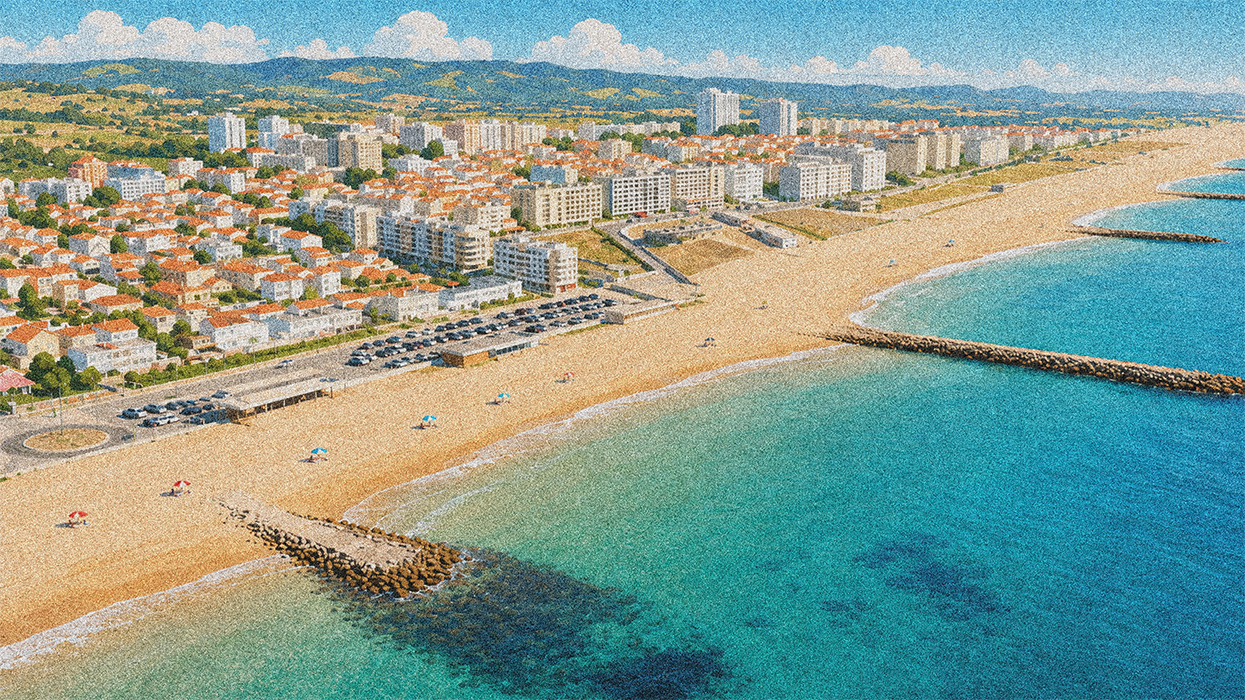
Costa da Caparica: A massive stretch of Atlantic beach running south from Almada. Popular with surfers, families, and beach lovers who want sand and ocean as their daily backdrop rather than a weekend destination. The northern end is lively and developed; the southern stretch gets progressively wild and empty.
The Vibe: Working-class roots with rapid modernization. The Almada Forum shopping center, strong public schools, and the Almada metro (MST) connecting directly to Lisbon via the 25 de Abril bridge give it genuine urban infrastructure.
The Reality Check: The 25 de Abril bridge is a notorious bottleneck during rush hour. If you’re commuting by car, mornings heading north and evenings heading south can be painful. The ferry and the MST rail are better options for daily commutes.
Who it’s for: Beach lovers, young families, and professionals who want river or ocean views at a fraction of Lisbon center pricing, with reliable public transit into the city.
2. Odivelas: The Metro-Connected North
Odivelas sits directly north of Lisbon’s city limits, and its defining advantage is simple: it has its own Yellow Metro line extension, operational since 2004, putting residents 20 minutes from downtown Lisbon by train.
The Vibe: A mix of older village cores (the medieval Odivelas monastery is a local landmark) and modern apartment developments. It feels residential and settled — neither fashionable nor rough, just functional and well-connected.
Who it’s for: Families and professionals who want direct metro access to Lisbon, more space for less money, and a neighborhood where daily life operates entirely in Portuguese — you’ll integrate faster here than in the expat-heavy center.
3. Loures & Sacavém: The Northeast Corridor
Loures is a large municipality northeast of Lisbon that encompasses everything from semi-rural parishes with orchards and farmland to dense urban neighborhoods bordering the city. Sacavém, at its southern edge, sits right next to Parque das Nações and benefits from that district’s infrastructure without the price tag.
The Vibe: Diverse and practical. Loures’ municipal government has invested heavily in public facilities — sports complexes, parks, cultural centers. The northern parishes offer a genuinely rural feel (quintas with land, orchards) while remaining 25 minutes from the airport.
Who it’s for: Buyers who want proximity to the airport, modern apartment stock at competitive prices, or rural properties with land that are still within commuting distance of the capital.
4. Amadora: The Affordable Urban Core
Amadora is Lisbon’s most densely populated suburb and, until recently, one of its least glamorous. It carries a reputation that’s increasingly outdated. Over the past decade, significant urban renewal — new public spaces, cultural venues, improved transit — has been transforming the municipality.
The Vibe: Multicultural, energetic, and evolving. Well-served by the Blue Metro line, with stations at Amadora Este and Alfornelos providing direct downtown access. The Dolce Vita Tejo shopping center and a growing restaurant scene are adding amenities.
The Reality Check: Some pockets remain rough, and the architectural stock is uneven — a lot of 1970s and 1980s apartment blocks that haven’t aged well. But the best areas (Venteira, Mina de Água, Reboleira near the new metro extension) offer genuine value and improving infrastructure.
Who it’s for: Budget-conscious professionals and young families who prioritize metro connectivity and affordability above all else, and who don’t need the aesthetic polish of the center.
5. Alcochete & Montijo: The Quiet South Bank
Cross the Vasco da Gama bridge and you enter a different world. Alcochete and Montijo sit on the south bank of the Tagus estuary, facing Lisbon across the water but feeling like small, independent towns rather than suburbs.
Alcochete: This is the municipality that’s having a moment. A charming, whitewashed town with a beautiful riverside promenade, salt flats where flamingos wade in winter, and a protected nature reserve (Reserva Natural do Estuário do Tejo). Prices jumped 26% year-on-year in the Setúbal Peninsula according to INE’s latest data — and Alcochete is a big part of that growth. Families are discovering that you can buy a modern house with a garden here for the price of a two-bedroom apartment in central Lisbon.
Montijo: Larger and more urban than Alcochete, sitting directly at the south end of the Vasco da Gama bridge. Strong commercial infrastructure, new residential developments, and consistent ferry service across the estuary. There’s ongoing discussion about a new Tagus crossing (the controversial TGV bridge or a dedicated transit link) that would dramatically improve south bank connectivity — worth monitoring.
The Vibe: Quiet, spacious, nature-forward, and increasingly connected.
The Reality Check: You are bridge-dependent. The Vasco da Gama bridge is well-maintained and rarely as congested as the 25 de Abril, but your daily commute to Lisbon (25–35 minutes by car, depending on traffic) involves a toll. Ferry service exists but is less frequent than on the western south bank. These municipalities work best if you’re remote-working or commuting 2–3 days a week rather than daily.
Who it’s for: Families and remote workers who want space, nature, a genuine small-town Portuguese feel, and real estate that’s still priced below the broader Lisbon market — though the window is narrowing fast.
6. Palmela: Wine Country Within Reach
Inland from Setúbal, sitting on a hilltop crowned by a medieval castle, Palmela is the kind of place most Americans don’t know exists until someone shows them. It’s a wine-producing municipality surrounded by vineyards (the Castelão grape dominates here), with sweeping views of the Arrábida mountain range and the estuary below.
The Vibe: Rural elegance. The town center has excellent restaurants, a Saturday market, and a pousada (historic hotel) inside the castle walls. The surrounding countryside offers quintas and estates with land at prices that buyers in the Alentejo or the Douro might find hard to believe.
The Reality Check: This is genuinely rural — you need a car, and your nearest international school is a drive away. Daily commuting to Lisbon is possible (40–50 minutes via the A2 motorway) but it’s not a suburb in any traditional sense.
Who it’s for: Wine lovers, quinta seekers, and retirees who want a Portuguese country life within striking distance of the capital and the Arrábida coast. Pairs beautifully with our Setúbal guide in the Lisbon & Surrounds overview.
At a Glance
Greater Lisbon isn’t where you go when you can’t afford the center. It’s where you go when you realize the center can’t give you what you actually need — a garden, a beach, a vineyard, a quiet street, a parking space. These municipalities offer a quality of daily life that the dense, competitive, tourist-heavy capital can’t match, with transit connections that make the distance feel shorter than it looks on a map.
Curious about which part of Greater Lisbon fits your life? Let’s look at the numbers and the neighborhoods together.
