Peneda-Gerês: Portugal’s Only National Park
Portugal has dozens of natural parks and protected areas. But it has only one national park: Peneda-Gerês. That distinction matters. National park status carries the highest level of environmental protection in the country, and the result is 70,000 hectares of wild, largely untouched territory in the far northwest — a landscape of granite peaks, ancient oak forests, cascading waterfalls, and river pools so clear you can count the stones on the bottom from three meters above.
Together with the adjacent Spanish nature park Baixa Limia–Serra do Xurés, it forms a transboundary UNESCO World Biosphere Reserve. This is the wildest, most ecologically intact corner of Portugal, and it feels it. If Serra da Estrela is Portugal’s mountain country, Peneda-Gerês is its wilderness.
What You’re Walking Into
The park spans five municipalities — Arcos de Valdevez, Melgaço, Montalegre, Ponte da Barca, and Terras de Bouro — and encompasses 22 rural villages where communities have lived in close relationship with the land for centuries. Granite espigueiros (traditional raised granaries) stand in clusters on the hillsides, looking like they were placed there by a civilization that understood something about proportion and permanence that modern architecture has forgotten.
The fauna is extraordinary. Wolves still roam the higher elevations. Roe deer, wild boar, and Iberian vipers inhabit the forests. Golden eagles and peregrine falcons circle the granite peaks. For Americans coming from a country where national parks are a way of life, Gerês will feel instantly familiar in spirit — Yosemite’s wildness, but compressed into a smaller, more intimate scale, with stone villages where people actually live inside the park.
The Gateway Towns
Arcos de Valdevez
The largest town near the park and the one with the best infrastructure for daily life. Arcos sits in the beautiful Lima River valley, surrounded by vineyard-covered slopes (this is Vinho Verde country). The town center has excellent restaurants, a good weekly market, and a growing number of boutique hotels and rural tourism operations. It’s also the gateway to the Mezio plateau, one of the most accessible and scenic areas of the park.
The Vibe: Small-town warmth with just enough infrastructure to feel comfortable. Agricultural, traditional, and genuinely welcoming.
Ponte da Barca
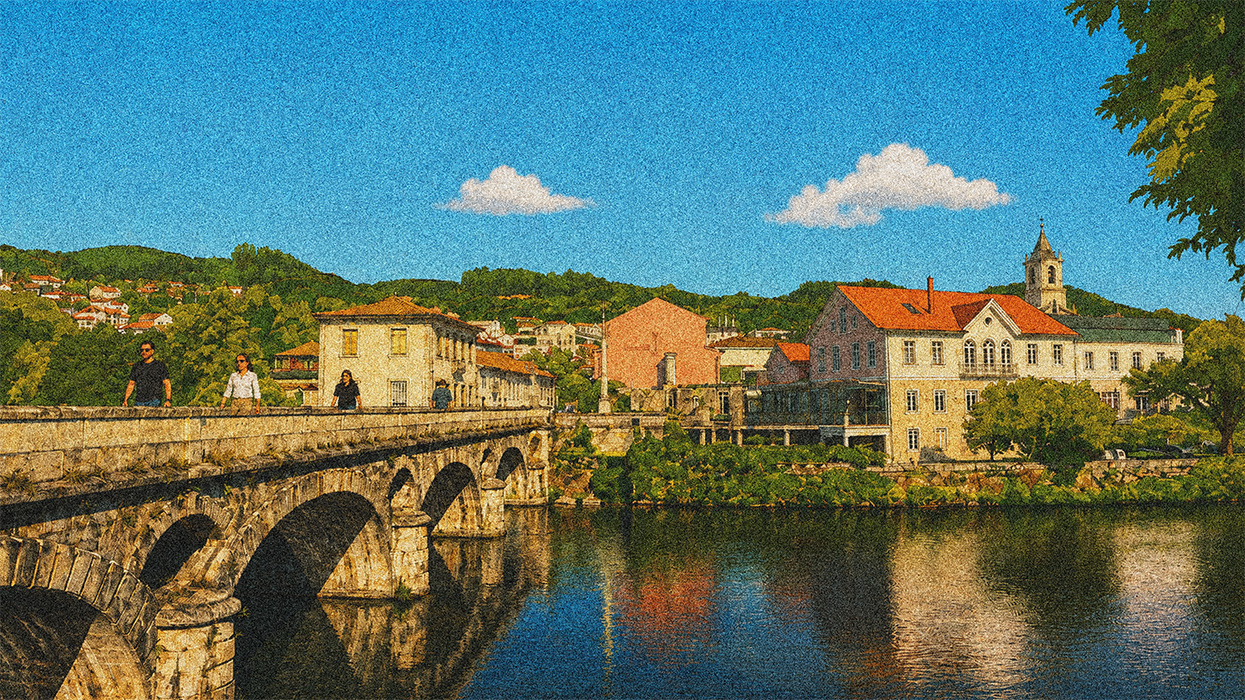
A charming medieval town on the Lima River, famous for its Roman bridge, its weekly market (one of the oldest in Portugal), and its role as a launching point for hikes into the Peneda section of the park. Smaller and quieter than Arcos, with a more intimate feel.
Who it’s for: Hikers, nature lovers, and anyone who wants to live within walking distance of a medieval bridge over a crystal-clear river, surrounded by mountains.
Terras de Bouro & Vila do Gerês
Terras de Bouro is the municipality that encompasses the central and southern portions of the park, including the famous thermal village of Vila do Gerês itself. Vila do Gerês is a tiny spa town deep inside the park, built around centuries-old thermal springs. It’s the most “inside the park” you can get while still having a hotel, a restaurant, and a functioning postal address.
Who it’s for: People who want to wake up inside a national park every morning and don’t need much beyond nature, silence, and a good fire.
Montalegre & the High Barroso
At the northeastern edge of the park, the landscape shifts from lush green valleys to the high, windswept plateau of the Barroso. Montalegre is a castle town on the edge of this plateau — famous for its medieval fair, its smoked sausages (alhós de Barroso have a Slow Food presidium designation), and winters that are genuinely cold. The Barroso region was designated by the FAO as a Globally Important Agricultural Heritage System — one of the few in Europe — recognizing farming practices that have been sustained for over a millennium.
Who it’s for: The most adventurous expats — those who want true isolation, ancient farming culture, and landscapes that feel closer to Scotland than southern Europe.
The Water
If one thing defines daily life near Gerês, it’s water. Rivers, waterfalls, natural pools, and reservoirs are everywhere. The Peneda and Gerês ranges catch enormous amounts of Atlantic rainfall, feeding rivers that carve through granite valleys and create some of the best wild swimming in Europe.
The Cascata do Arado, the pools of Fecha de Barjas, the Albufeira da Caniçada — in summer, these become natural gathering points for locals and visitors. Unlike the beaches of the Algarve or the Silver Coast, there are no crowds, no parking attendants, no entrance fees. You park on a forest road, walk down a trail, and find yourself in a river pool surrounded by granite and oak. It’s the kind of swimming Americans associate with the Pacific Northwest or Appalachia, except the water is warmer and nobody’s wearing a wetsuit.
Property and Living
The Gerês region offers some of the most affordable rural property in Portugal. Granite quintas with land, restored stone cottages, and village houses in traditional communities can be found at prices that make even the Serra da Estrela market look expensive. Many properties come with terraces of vine, chestnut groves, and river frontage.
The rural tourism sector is growing, and a number of expats have successfully converted properties into small guesthouses, nature retreats, and yoga centers. The park’s protected status limits large-scale development, which keeps the landscape intact but also means building permits for new construction are significantly more restrictive than elsewhere in the country.
The Reality Check
This is deep rural Portugal. Braga, the nearest major city, is an hour from most parts of the park. Porto is 90 minutes to two hours. International schools, major hospitals, and anything resembling a mall are all in Braga or further south. You need a car. Period.
Winters are wet and cold. The Minho climate is Portugal’s wettest. Expect significant rainfall from October through April. The green landscape is beautiful precisely because it rains constantly. If you need 300 days of sunshine, this is not your place.
The community is small and traditional. There is no established international expat community here. You’ll be integrating into Portuguese rural life directly, which means learning the language isn’t optional — it’s the price of admission.
Drawn to the wild north? Let’s talk about what’s realistic and what properties are available in the gateway towns.
