Serra da Estrela: Portugal’s Mountain Country
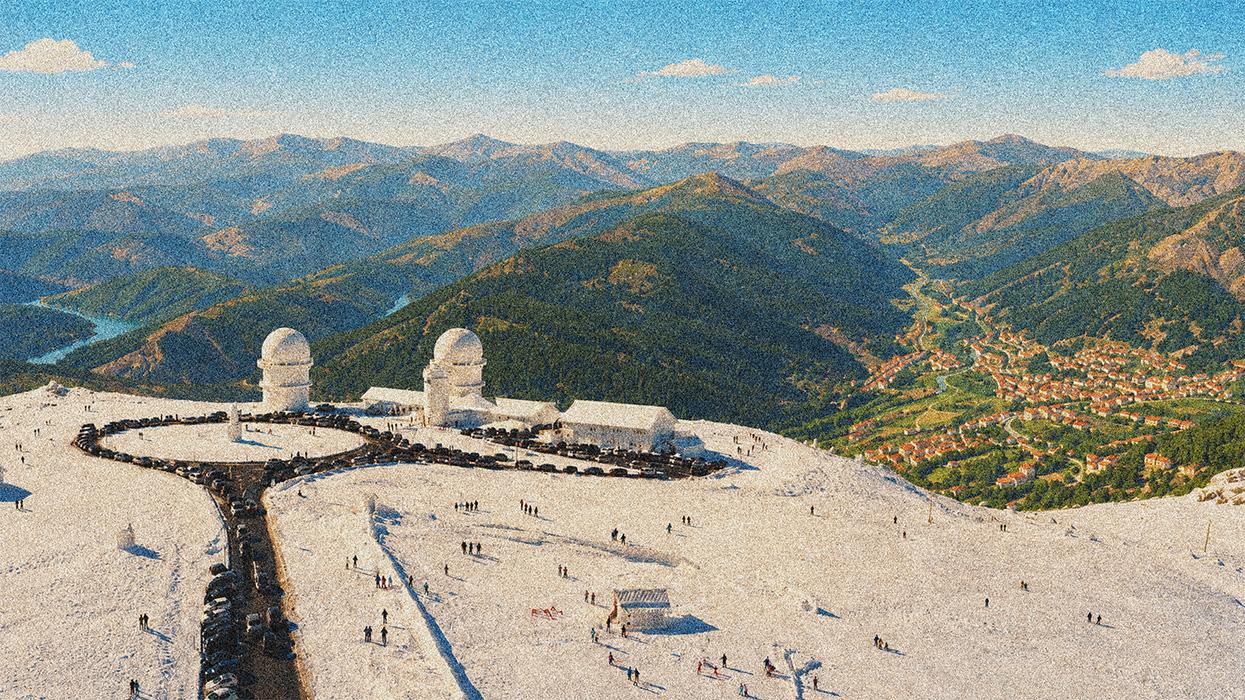
Most Americans planning a move to Portugal picture two things: beaches and cities. The idea that mainland Portugal has a nearly 2,000-meter mountain range with glacial valleys, a ski resort, and villages where snow settles on schist rooftops in winter simply doesn’t compute. But Serra da Estrela exists, and it’s a completely different country from the coastal Portugal you’ve been imagining.
Stretching across the center of the country between the districts of Guarda and Castelo Branco, Serra da Estrela — the “Star Mountain” — is mainland Portugal’s highest point. Torre, its summit, reaches 1,993 meters. The surrounding natural park covers over 1,000 square kilometers of granite peaks, alpine meadows, glacial-carved valleys, pine forests, and some of the most pristine river swimming holes in Europe. It’s also the birthplace of Queijo Serra da Estrela, arguably the most famous artisanal cheese in the country — a soft, creamy, thistle-curdled sheep’s milk cheese that locals eat by cutting off the top and scooping it out with a spoon.
The Snow: Portugal’s Only Ski Resort
Yes, you can ski in Portugal. The Estância de Esqui da Serra da Estrela, near the summit at Torre, is the country’s only ski resort. It operates from roughly December through April, with 9 slopes totaling about 6 kilometers and a mix of platter lifts and a chairlift.
Let me be honest about it: if you’re seriously into skiing, you may find it underwhelming. Our kids used to ski in Tahoe every winter, and the comparison is not close. The slopes are short, not particularly challenging, and the infrastructure is modest by Alpine or even Andorran standards.
But here’s the thing — our kids still loved a winter getaway at Serra da Estrela. It’s fun. It’s a weekend trip, not a ski vacation. And it’s just a few hours from either Lisbon or Porto, which makes it dramatically more accessible than driving to Andorra or flying to the Alps. For families with children, or for anyone who misses the feeling of snow and mountain air, it’s a genuine pleasure — as long as you calibrate your expectations. Think of it as a snow day in the mountains, not a week in Vail.
The Towns
Manteigas: The Heart of the Valley
Sitting at about 775 meters in the stunning Zêzere glacial valley, Manteigas is the most charming town in the region and the best base for exploring the park. The Zêzere River flows through the valley floor, shaped 20,000 years ago by glaciers. The town itself is small, quiet, and focused on the mountain: hiking guides, artisanal cheese producers, thermal springs, and the famous Burel Factory, where traditional Serra da Estrela wool is transformed into contemporary blankets, coats, and homeware using techniques and machines that date back centuries.
The Vibe: Alpine village meets Portuguese simplicity. Clean mountain air, stone houses, zero pretension.
Property: Surprisingly affordable. Manteigas averages around €870 per square meter — a fraction of what you’d pay on the coast. Restored stone houses with mountain views exist here at prices that barely register on the Lisbon or Algarve scale.
Covilhã: The Gateway City
Sitting on the lower slopes at the southeastern edge of the park, Covilhã is the largest urban center near Serra da Estrela and the practical base for anyone who wants mountain proximity with real city infrastructure. A university city (Universidade da Beira Interior) with hospitals, schools, supermarkets, and a growing tech and textile innovation scene built on the region’s centuries-old wool industry.
The Vibe: Working mountain city with a young population. Not tourist-oriented, not polished, but genuinely functional.
Who it’s for: Families and professionals who want to live near the mountains with full urban services, accepting that those services come in a small-city package, not a Lisbon one.
Seia, Gouveia & the Western Approach
The western side of the park is accessed through Seia and Gouveia, two pleasant towns that serve as gateways to the higher elevations. Seia hosts the Serra da Estrela Interpretation Centre and is the traditional starting point for the drive up to Torre. Gouveia is smaller, quieter, and anchored by a beautiful municipal park.
Cabeça: Our Favorite Mountain Village
High in the mountains above Seia, the tiny schist village of Cabeça is a place we particularly love. Its 170 residents have built a vibrant, small but dedicated arts community — working with the traditional materials of the mountain: wool, wood, schist, and fern. Every Christmas, the entire village transforms into the Aldeia Natal, an ecological, handmade winter celebration where every decoration is crafted from natural materials found in the surrounding forests. Stars made from maize husks, Christmas baubles molded from fern leaves, wreaths of bracken and holly on every schist doorway.
But Cabeça isn’t just a Christmas destination. Year-round, the village sustains a creative community of artisans and makers who are quietly proving that rural mountain Portugal can reinvent itself without losing its identity. It’s the kind of place that makes you rethink what’s possible in a village of 170 people on a mountainside.
The Landscape
The landscape of Serra da Estrela is unlike anything else in Portugal. The glacial valley that runs from Manteigas to the Covão d’Ametade is genuinely dramatic — massive granite boulders, alpine meadows, crystal-clear streams, and a silence so complete it takes a few hours to stop noticing it. The Lagoa Comprida, a natural lake at over 1,500 meters, feels like it belongs in Switzerland, not a country known for sardines and beach culture.
In spring and summer, the wildflowers are extraordinary. In autumn, the chestnut and oak forests turn gold. In winter, the peaks go white. It’s the only place in Portugal where the landscape changes so dramatically with the seasons, and that seasonal rhythm is part of what makes living here different from anywhere on the coast.
The Reality Check
Isolation is real. Serra da Estrela is over two hours from both Lisbon and Porto. There is no motorway directly through the park. The mountain roads are winding, steep, and occasionally closed by snow or ice in winter. This is not a place you live if you need to be in a major city frequently.
Services are limited. Covilhã has a hospital and university. Manteigas has basic services. The smaller villages have almost nothing. You’ll need a car, you’ll need to plan, and you’ll need to accept that the nearest international school is a long drive away.
Winters are cold. This is not the Algarve. Temperatures drop below freezing regularly from November through March. Heating, insulation, and firewood are not luxuries — they’re essentials.
Curious about mountain life in Portugal? Let’s talk about what the property market looks like and what living here actually involves.
